BESTMARKED guide
How to Choose and Use a Ski Race Timer
A ski race timer should match the job on the hill. A phone or stopwatch can suit informal drills, while coordinated start and finish timing is better for coached sessions, and sanctioned competition may require approved event equipment and procedures. Choose based on timing purpose, course coverage, communication reliability, athlete identification, and the backup plan.
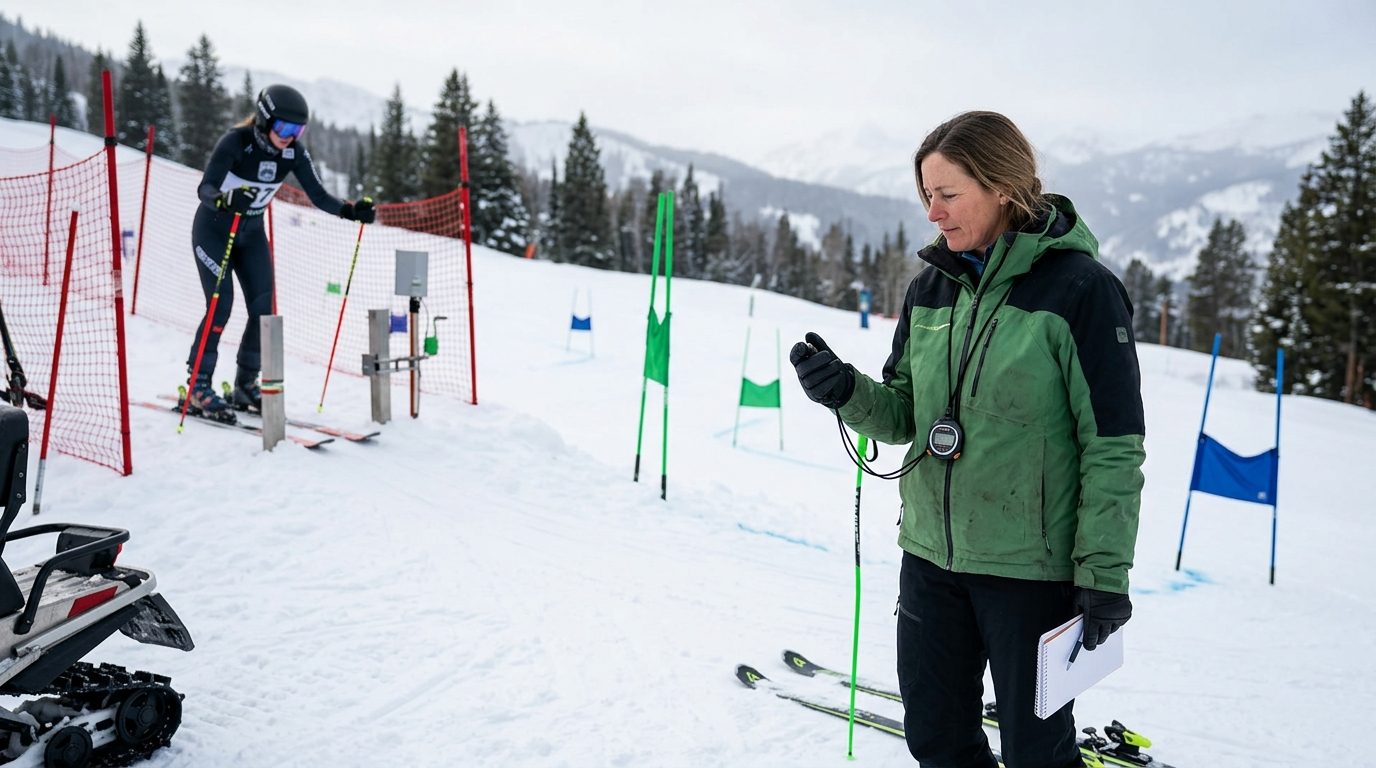
What does a ski race timer need to do?
The basic job is to connect an athlete’s start with the corresponding finish and produce a usable elapsed time. That sounds simple until several athletes, split points, course workers, weather, and unreliable communication enter the picture.
Start by defining the session. An athlete checking repeated starts has different needs from a coach timing a full training course. A race organizer has a further responsibility: the timing process must fit the rules and operating procedures for that event.
- Informal practice: quick setup and immediate feedback matter most.
- Coached training: athlete identification, repeatable operation, and saved results become more important.
- Organized competition: use the equipment, approvals, personnel, documentation, and backup process required by the governing body.
Which type of timer fits your session?
A handheld stopwatch is the simplest option. It works best when one person can clearly observe the relevant action or when separate hand timers follow a coordinated procedure. The Big Sky Ski Education Foundation describes hand timers working at the start or finish with stopwatches and document packets, which shows that manual timing is also a defined backup role rather than casual button pressing.
A phone-based timer can be useful for drills where the operator is close to the athlete and the consequence of a missed time is low. It is portable and familiar, but gloves, moisture, battery condition, screen interaction, and limited sight lines can make operation harder on snow.
Dedicated wireless systems are built to connect course components and reduce manual coordination. Brower’s ski timing page, for example, describes a timer, start wand, photocells, athlete data tools, and local storage that does not depend on continuous internet service. Those are product-specific claims, so evaluate the official documentation for the exact system you are considering.
A visual downhill race timer with a random winner is an entertainment tool. It may work for a classroom or group activity, but it does not measure a skier moving through a real course.
How should you choose between a phone, stopwatch, and dedicated system?
Choose the least complex setup that can still produce trustworthy information for the session. A phone may be enough for a coach timing a short drill from one viewing position. A stopwatch can support manual timing or serve as a backup. A dedicated system makes more sense when the start and finish are separated, athletes run in sequence, or results need to be collected consistently.
Do not base the decision on claimed precision alone. The full process matters: triggering, communication, athlete matching, recording, recovery after an interruption, and the ability to confirm that the captured time belongs to the correct run.
- Use a phone when the session is informal, the operator has a clear view, and a missed result will not disrupt the day.
- Use coordinated stopwatches when trained operators can communicate and maintain written records.
- Consider dedicated course hardware when remote triggering, athlete identification, split capture, or dependable result storage is important.
- Follow event rules rather than this general guide when timing an official race.
What should you check before the first run?
Set up early enough to test the complete path from start action to saved result. A component turning on is not proof that the timing chain works. Trigger a practice run, confirm that the finish is received, and verify where the result appears.
Agree on athlete order and the method used to identify each run. If a racer restarts, skips a gate, or finishes out of order, the timing team needs a simple way to flag the record instead of guessing later.
Check the backup method before it is needed. The backup may be a hand stopwatch, a written start list, a second communication channel, or another procedure required by the event. Everyone involved should know who records the fallback time and where that record goes.
- Secure equipment where skis, course workers, or changing snow will not move it.
- Confirm that start and finish operators can communicate.
- Run a full test using the same workflow planned for athletes.
- Verify athlete order and the handling of reruns or missed triggers.
- Keep timing notes with the session record.
Where should split timing be added?
Add a split where it answers a coaching question. A split near the start can isolate acceleration. A split around a technical section can help compare line execution. A lower-course split can reveal whether an athlete carried speed after a transition.
Avoid adding split points merely because the equipment supports them. Every checkpoint adds setup work and another result to interpret. Place the sensor where the course gives athletes a comparable task, then keep that location stable during the session.
For a broader explanation of elapsed segments and how to read them, use the internal split-time running guide. The sport differs, but the core distinction between a segment result and the complete elapsed result remains useful.
How do you turn ski times into useful feedback?
Compare like with like. A time from one course set should not be treated as directly equivalent to a time recorded after the course, snow, visibility, start position, or timing method changes.
Record context beside the result. Useful notes include the course section being trained, the timing method, equipment interruptions, reruns, and any condition that affected comparability. The goal is to help the athlete connect the time with an observable part of the run.
Look for repeatable patterns instead of reacting to an isolated fast result. If a split improves while the full run becomes less consistent, review the section after that split. Timing points to where a discussion should begin; it does not explain technique by itself.
Common timing mistakes to avoid
The most damaging errors are often procedural. A clean display cannot repair an athlete mismatch, a missed trigger, or an undocumented course change.
This guide was prepared from the supplied public pages and search evidence. BESTMARKED did not conduct hands-on testing of the timing products mentioned, so product capabilities should be confirmed on their official pages before purchase or event use.
- Starting timed runs before completing an end-to-end test.
- Changing the course while comparing results as though conditions stayed constant.
- Recording times without athlete names or run identifiers.
- Assuming an internet connection is the only possible failure point.
- Using an entertainment timer as evidence of athletic performance.
- Relying on a primary timer without a defined fallback process.
What is the next practical step?
Write down the purpose of the next ski session and choose the timing method that meets that purpose with the fewest failure points. Test the workflow, identify every run, preserve context, and review the results with the athlete.
For a phone-based starting point, visit the BESTMARKED race timer app page. You can also review the site’s split-time guide before deciding which checkpoints will provide useful coaching feedback.
Frequently asked questions
Can a phone work as a ski race timer?
Yes, a phone can suit informal drills when the operator has a clear view and a missed time has little consequence. Use coordinated or dedicated timing when the start and finish are separated or dependable records are important.
Is a stopwatch accurate enough for ski training?
A stopwatch can provide useful training feedback, but operator reaction, visibility, athlete identification, and recordkeeping all affect the result. Keep the method consistent and avoid comparing manual times directly with results captured by a different setup.
Do I need internet service to time a ski course?
That depends on the system. Some dedicated products describe local timing and storage that can operate without continuous internet service, while cloud features may need a later connection. Confirm the workflow in the manufacturer’s documentation.
What is the difference between a ski timer and a random downhill race timer?
A ski timing setup measures an athlete on a real course. A random downhill race timer is an entertainment display that selects a simulated winner and should not be used for performance measurement.
Should every ski training course include split times?
No. Add a split only when it isolates a section the coach intends to evaluate. Extra checkpoints create more setup and interpretation work without automatically producing better feedback.
Can this guide replace official race timing rules?
No. Organized events should follow the current equipment, staffing, documentation, approval, and backup requirements of their governing body.
Continue learning
Official sources and references
Review information
Reviewed by: BESTMARKED Editorial Team. Last reviewed: